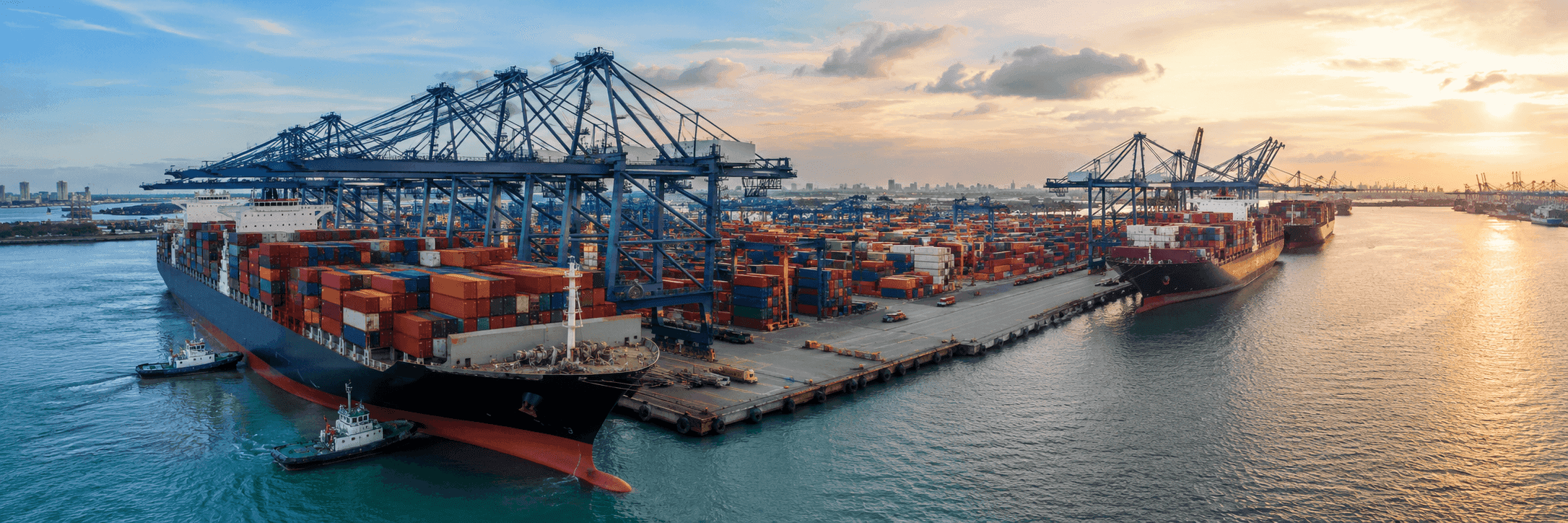
Container ships range from regional feeder vessels below 1,000 TEU to ultra-large ships exceeding 24,000 TEU. Modern vessels can approach 400 metres in length and about 61 metres in beam, but practical deployment depends on canal dimensions, port depth, berth strength, crane outreach and cargo demand. Ship classes such as Panamax and Neopanamax reflect infrastructure limits, while feeder and ULCV categories describe operational scale.
History and Evolution of Container Ships
The modern container era began in 1956, when American entrepreneur Malcolm McLean launched the first containerized voyage aboard the converted tanker Ideal X. That ship carried only 58 containers, but the concept quickly transformed maritime logistics.

During the 1960s and 1970s, the first purpose-built container ships appeared. Early vessels typically carried between 500 and 1,500 TEU (twenty-foot equivalent units). Ports gradually adapted by installing container cranes and standardized terminals.
By the 1990s, global trade expansion pushed shipbuilders to increase vessel container capacity. Ships in the Panamax class reached about 4,500–5,000 TEU, the largest size able to pass through the original Panama Canal. In the 2010s, a new generation of ultra-large container vessels emerged, exceeding 20,000 TEU. Examples include ships such as MSC Irina and Ever Alot, demonstrating how dramatically container vessel sizes have expanded.
Types and Classes of Container Ships

Feeder vessels are the smallest type. With capacities below 1,000 TEU, they connect regional ports to major hub terminals. These ships often operate in coastal or short-sea trade, where port infrastructure may be limited.
Feedermax ships typically carry between 1,000 and 3,000 TEU. They serve secondary trade routes and distribute cargo from major hubs to smaller regional markets.
Panamax container ships represent the maximum container ship size that could pass through the original Panama Canal before its expansion. Their capacity generally ranges from 4,000 to 5,000 TEU.
Post-Panamax ships exceed those limits and usually carry 6,000 to 10,000 TEU. They operate mainly on major intercontinental routes.
How large are the biggest container ships?
New Panamax and ultra-large container vessels (ULCVs) are the giants of modern shipping. Neopanamax vessels are defined by compatibility with the expanded Panama Canal and may have capacities above 10,000 TEU, depending on design. Ultra-large container vessels form a separate, non-uniform market category, commonly used for ships above approximately 14,500 TEU. The largest ULCVs are generally deployed on high-volume deep-sea services, particularly between Asia and Europe.
Class | Approximate capacity | Primary constraint/use |
Small feeder | Below 1,000 TEU | Regional and smaller ports |
Feeder | 1,000–2,000 TEU | Hub-and-spoke services |
Feedermax | 2,000–3,000 TEU | Larger regional services |
Panamax | Approximately 3,000–5,100 TEU | Original Panama Canal limits |
Post-Panamax | Approximately 5,100–10,000 TEU | Too wide for original locks |
Neopanamax | Design-dependent, often above 10,000 TEU | Expanded Panama Canal limits |
ULCV | Commonly above 14,500 TEU | High-volume deep-sea routes |
Size, Capacity, and Cargo Ship Dimensions
When discussing cargo ship size, several metrics are used.
What does TEU mean?
The first is TEU capacity, which indicates how many standard containers a vessel can carry. A small feeder ship might carry 800 TEU, while the largest container ships exceed 23,000 TEU.
Another important measure is deadweight tonnage (DWT). This indicates the total weight of cargo, fuel, and supplies the ship can safely carry.
Physical cargo ship dimensions also define vessel capabilities. For example:
- Length: 150–400 meters
- Beam (width): 25–61 meters
- Draft: 8–16 meters
The dimensions of a cargo ship influence which ports and canals it can access. Ultra-large container ships can exceed 400 meters in length and require deepwater ports with advanced crane infrastructure.

Canal and Port Infrastructure Limits
Despite technological progress, infrastructure still shapes practical container ship sizes.
The original Panama Canal limited vessels to about 32 meters in beam and roughly 5,000 TEU capacity. The canal expansion in 2016 introduced new locks that allow ships up to about 14,000 TEU, often called New Panamax vessels. Current Neopanamax limits are approximately 370.33 metres in length, 51.25 metres in beam and 15.24 metres of tropical freshwater draft.
The Suez Canal allows much larger ships, which is why Asia–Europe routes frequently use ultra-large container vessels. However, even the Suez Canal has draft limitations and navigational constraints.
Port infrastructure also matters. Larger ships require deeper channels, stronger berths, and high-capacity container cranes. Major hubs such as Shanghai, Singapore, and Rotterdam have invested heavily to handle the largest vessels, while smaller ports rely on feeder services.
Economics, Efficiency, and Environmental Impact
Larger ships usually offer lower transportation costs per container. When a ship carries 20,000 TEU instead of 5,000 TEU, the fuel consumption per container can decrease significantly. Larger ships can reduce cost and emissions per carried TEU when utilization is high and operations are efficient. These gains are not automatic: low utilization, port congestion, additional feeder legs and longer waiting times can offset part of the sea-leg advantage.
However, economies of scale come with trade-offs. Ultra-large ships require high cargo volumes to remain profitable. If demand drops, shipping lines may face operational inefficiencies.

Environmental factors are also important. Modern container ships increasingly use energy-efficient engines, slow steaming practices, and alternative fuels such as LNG or methanol. Increasing vessel container capacity can reduce emissions per container, but port congestion and longer waiting times may offset some of these gains.
How Container Ship Size Affects Cargo Routing
For shippers, selecting the right vessel often depends on route structure, cargo volume, and delivery timelines.
Small feeder vessels are often ideal for regional distribution. For example, cargo arriving in Singapore may be transferred to a feeder ship for delivery to smaller Southeast Asian ports.
Medium-sized Post-Panamax ships are common on transpacific routes connecting China and the United States. These ships balance capacity with flexibility and can serve multiple ports along a route.
Ultra-large container ships typically operate between major global hubs such as Shanghai, Rotterdam, and Hamburg. They are efficient for high-volume cargo such as consumer goods, electronics, and manufactured products shipped in large quantities.
Understanding container ship size, cargo ship dimensions, and route limitations helps logistics companies choose the most efficient transport option.
Conclusions
The evolution of container shipping shows how vessel design has adapted to growing global trade. From early ships carrying a few hundred containers to today’s massive vessels exceeding 20,000 TEU, container vessel sizes continue to shape maritime logistics.
However, the largest ship is not always the best solution. Infrastructure limits, cargo volumes, and route structure determine which container ship sizes are most practical. For logistics companies and cargo owners, understanding container ship size comparison, operational constraints, and real dimensions of a cargo ship helps make informed decisions when planning international shipments.